
Brock Purdy: From Mr. Irrelevant to Prime-Time Threat
Brock Purdy entered the league in 2022 as the very last pick in the NFL Draft — the now-famous “Mr. Irrelevant.” Since then, the San Francisco 49ers quarterback has rewritten that label. Instead of fading quietly into the background, he has become the centerpiece of one of the league’s most explosive offenses and a serious contender in every MVP and Super Bowl discussion that matters.
Purdy is not the prototype in terms of arm strength or size, and he does not win games by out-running linebackers. His calling card is something more subtle and far more valuable in modern football: quick processing, anticipation, and a deep understanding of how to work within Kyle Shanahan’s system while still taking calculated risks downfield. The 49ers have surrounded him with elite skill talent — including Christian McCaffrey, George Kittle, Deebo Samuel, and Brandon Aiyuk — but it is Purdy’s command of the offense that turns that talent into 48-point scoreboards.
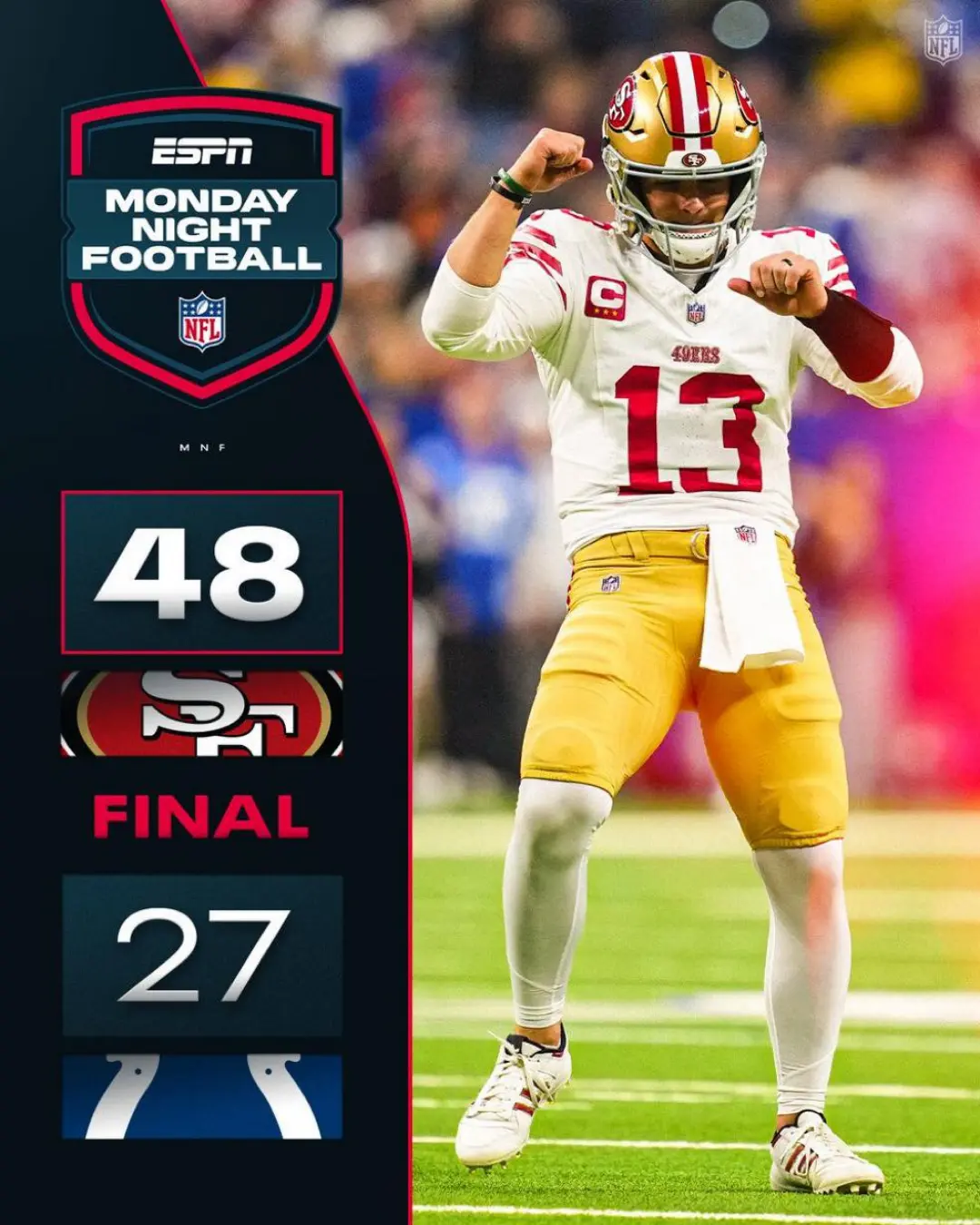
Case Study: The 48–27 Statement Win vs. the Colts
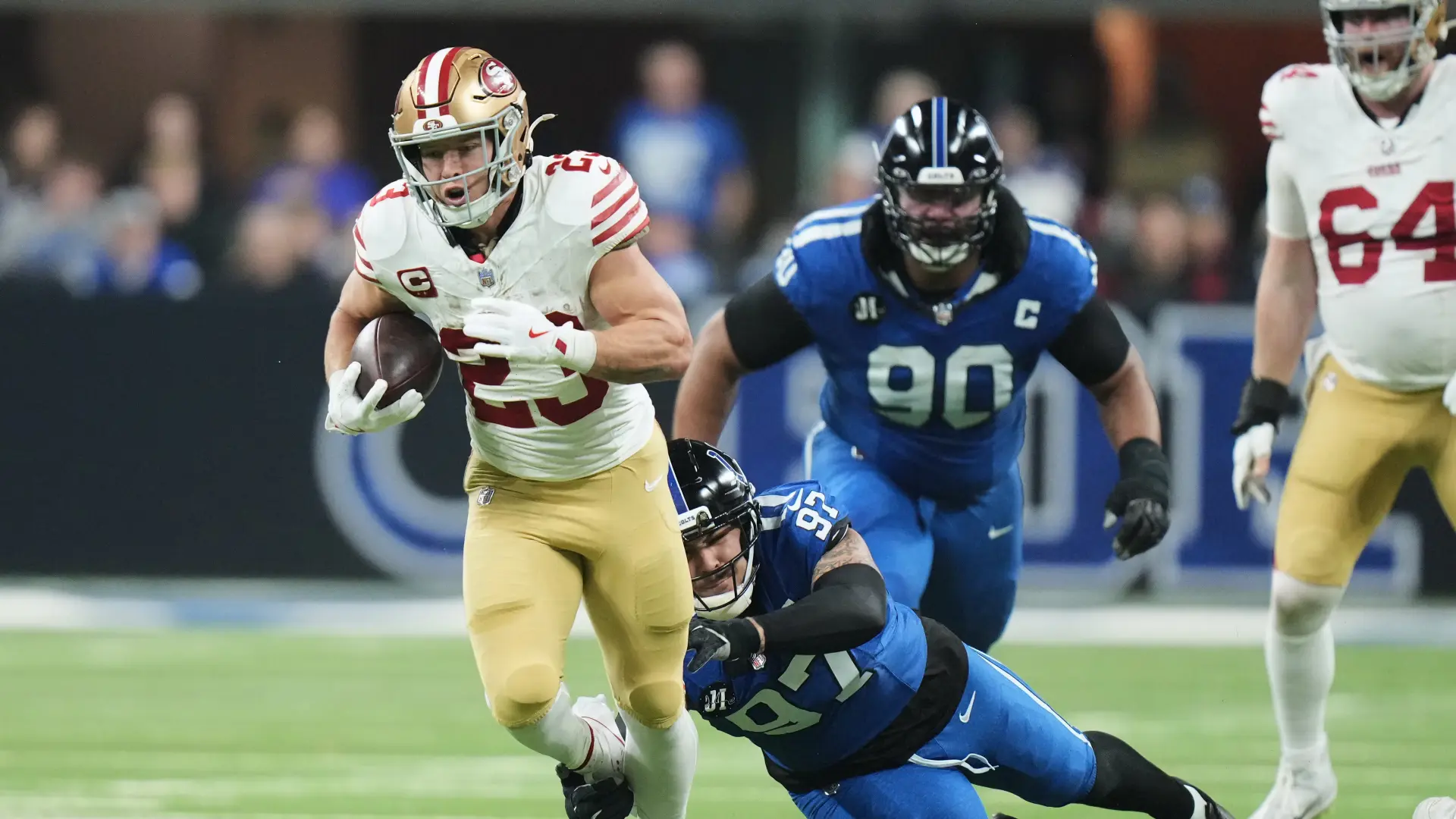
If you needed one game to understand what peak Brock Purdy looks like, the Week 16 Monday Night Football matchup against the Indianapolis Colts at Lucas Oil Stadium is the clearest evidence so far. San Francisco rolled to a 48–27 victory in a game that was supposed to be about the Colts’ emergency return to Philip Rivers — and ended up being all about Purdy’s dominance instead.
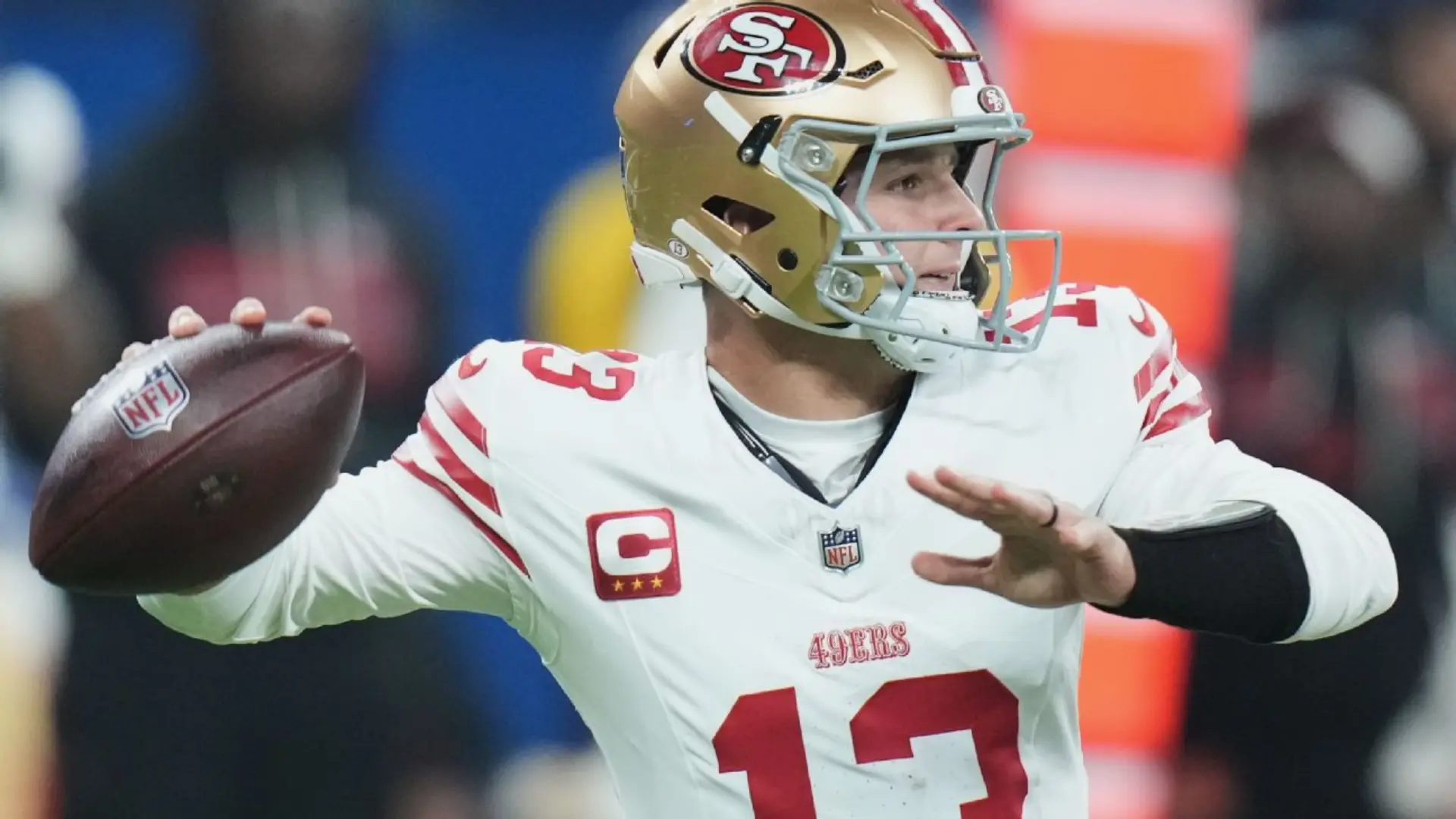
Purdy finished the night completing 25 of 34 passes for 295 yards, five touchdowns, and one interception. He became the first 49ers quarterback ever to throw five touchdown passes on a Monday night, and the first San Francisco signal-caller to throw five or more scores in any game since Steve Young’s six-touchdown masterpiece in Super Bowl XXIX.
The win pushed the 49ers to 11–4 and kept them in full control of their path to the NFC’s No. 1 seed and home-field advantage throughout the playoffs. Win their final two regular-season games, and the road to Super Bowl LX will go straight through Levi’s Stadium.
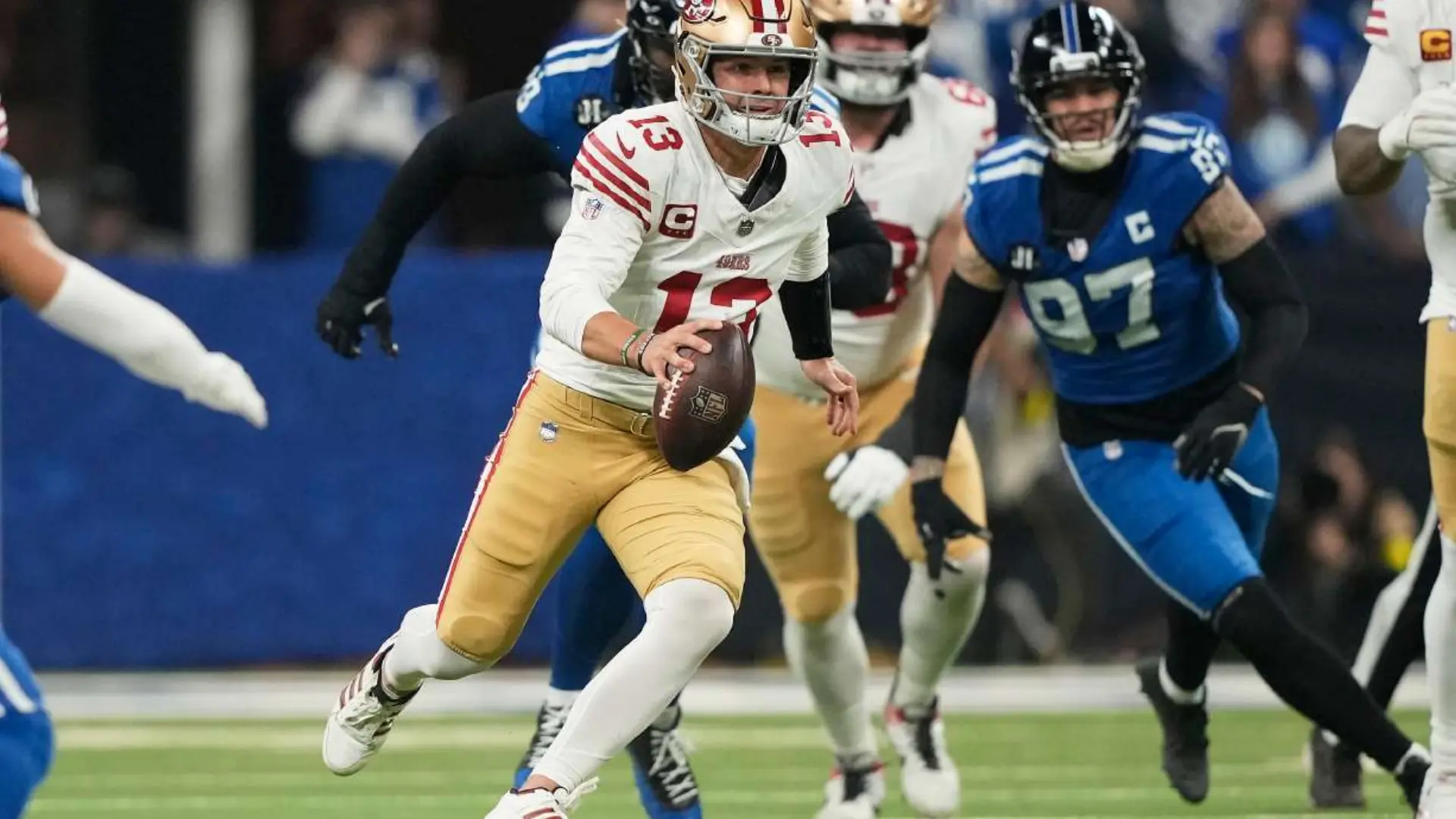
How Purdy Dissected the Colts’ Defense
Indianapolis came into the night shorthanded on defense, missing key pieces in the secondary. Whatever the Colts tried schematically — early zone looks, later man-coverage adjustments, selective blitzes — Purdy had the answers.
Early on, he attacked the soft spots in Cover 2 and other split-safety zones, repeatedly targeting the middle of the field with in-breaking routes and crossers. When the Colts shifted toward more man coverage in an effort to tighten throwing windows, San Francisco responded with play-action concepts and crossing routes that forced defensive backs to chase horizontally. Purdy delivered on time and in phase, often throwing receivers open rather than waiting to see them uncovered.
According to the game breakdown, Purdy was especially effective on passes of 10-plus air yards, completing the majority of those attempts and adding a pair of touchdowns on deeper throws. His average air yards per attempt for the night reached a season high, reflecting not just safe underneath passing but a confident vertical and intermediate attack.
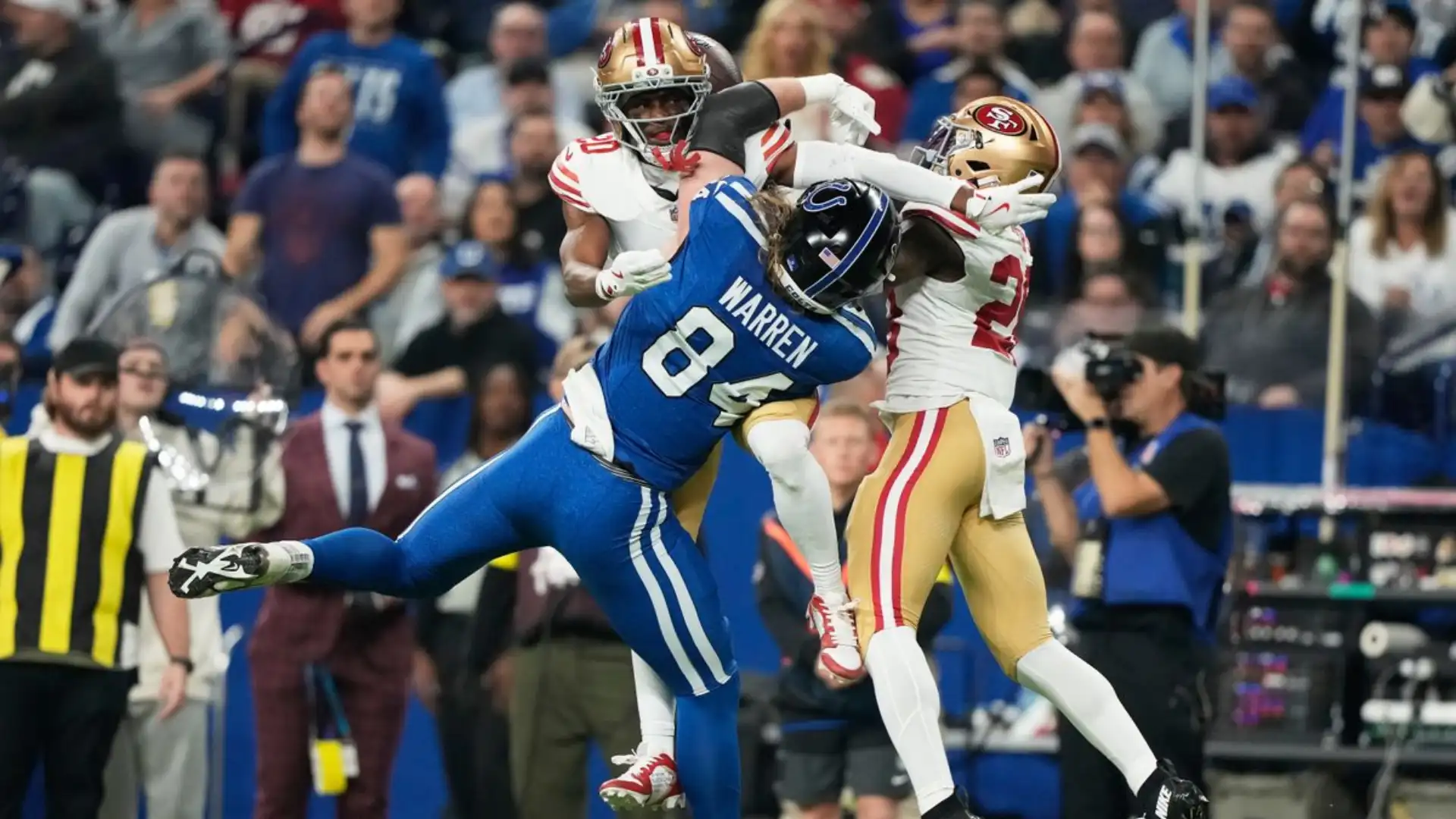
The George Kittle Connection and a Loaded Supporting Cast
San Francisco’s offense is built around stress—stress on linebackers, safeties, and defensive coordinators who must decide which weapon to prioritize. Against the Colts, tight end George Kittle was the most obvious problem. Before exiting with an ankle injury, Kittle recorded seven catches on eight targets for 115 yards and a touchdown, operating as Purdy’s primary mismatch over the middle.
Next Gen tracking data from the broader season underscores just how efficient that connection has become: Purdy’s passer rating when targeting Kittle sits in the mid-140s, the highest rating of any quarterback-receiver duo over the last five years with at least 50 targets. When defenses rotate extra bodies toward Kittle or load the box to slow Christian McCaffrey, Purdy calmly redirects traffic to Deebo Samuel, Brandon Aiyuk, or one of the backs on angle and choice routes. The Colts simply did not have enough healthy bodies to survive that kind of distribution.
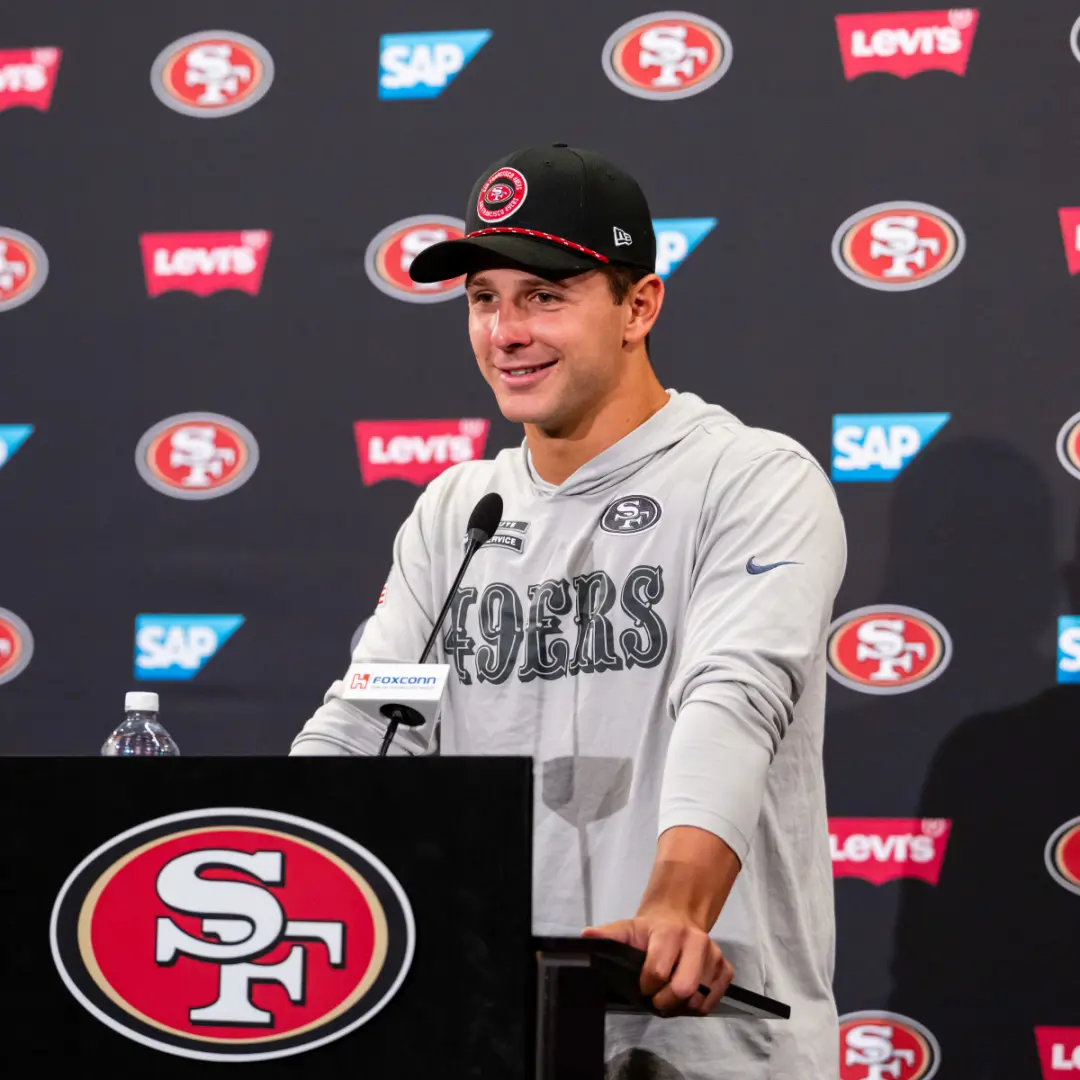
From Monday Night Question Marks to Prime-Time Proof
Before this season, there was a fair question hanging over Purdy’s résumé: could he consistently deliver on the biggest television stage? In his first five Monday appearances, he threw five touchdown passes but also 11 interceptions, and the 49ers went just 2–3 in those contests.
The rout of Indianapolis fundamentally changed that narrative. Purdy did not play like a quarterback nervous about the stage or the playoff stakes. Instead, he controlled the game with a calm tempo, spreading the ball to all levels of the field, staying disciplined in his reads, and avoiding the force-it throws that had previously gotten him into trouble. His lone interception came on an aggressive shot, but it did not shake his approach.
After the game, the discussion around Purdy shifted away from “Is he a product of the system?” toward “How far can this version of the 49ers go if he plays like this?” It was less about highlight-reel throws and more about sustained, efficient excellence over four quarters.
Why This Version of Brock Purdy Makes the 49ers a Title Favorite
The modern NFL is, increasingly, an offense-driven league. San Francisco’s defense remains structurally sound, but the unit has been closer to league-average than dominant in yards allowed and pass defense over the 2025 season. That reality puts even more weight on the offense — and by extension, on the quarterback — to score early and often.
The 49ers have responded. During their current winning stretch, they have averaged more than 30 points per game, and have gone back-to-back contests without a single punt — the first time they have done so in the regular season since at least 1950. That is not sustainable by accident. It reflects a quarterback who knows where to go with the football, trusts the scheme, and is willing to take what the defense gives until a bigger shot opens up.
In practical terms, that means San Francisco does not need the defense to be perfect in January. They need timely stops and red-zone resolve, paired with a Purdy-led offense that can win 31–28 just as comfortably as 24–10. The blowout of the Colts is a clean example of that template.
Strengths That Define Brock Purdy’s Game
- Processing and anticipation: Purdy consistently hits the top of his drop with a decision already made, which allows him to win from the pocket even without elite arm strength.
- Timing with receivers: The ball often arrives as Kittle, Samuel, or Aiyuk are coming out of their breaks, maximizing yards after the catch.
- Risk management: For most of this season, he has balanced aggression with ball security, taking deep shots when coverage dictates but rarely forcing ill-advised throws into double coverage.
- Leadership and poise: Teammates routinely reference the calm and clarity of his voice in the huddle. That presence matters when the game swings or the pass rush heats up.
What Still Needs to Be Proven
For all the justified praise, there are still fair questions that only time can answer, and this article will not pretend otherwise. Purdy will ultimately be judged by what he does in the postseason against top-tier defenses that have a full week to game-plan specifically for him.
Can he maintain this level when pass protection breaks down more often? Will he stay disciplined against disguised coverages in late-January games where every throw is magnified? Those are not criticisms; they are simply the next checkpoints in a young quarterback’s development curve. The Monday night performance against the Colts does not complete his story, but it strongly suggests that his ceiling is higher than many expected when he first entered the league.