
Vikings vs Lions: How Minnesota’s Defense Shaped the NFC Race
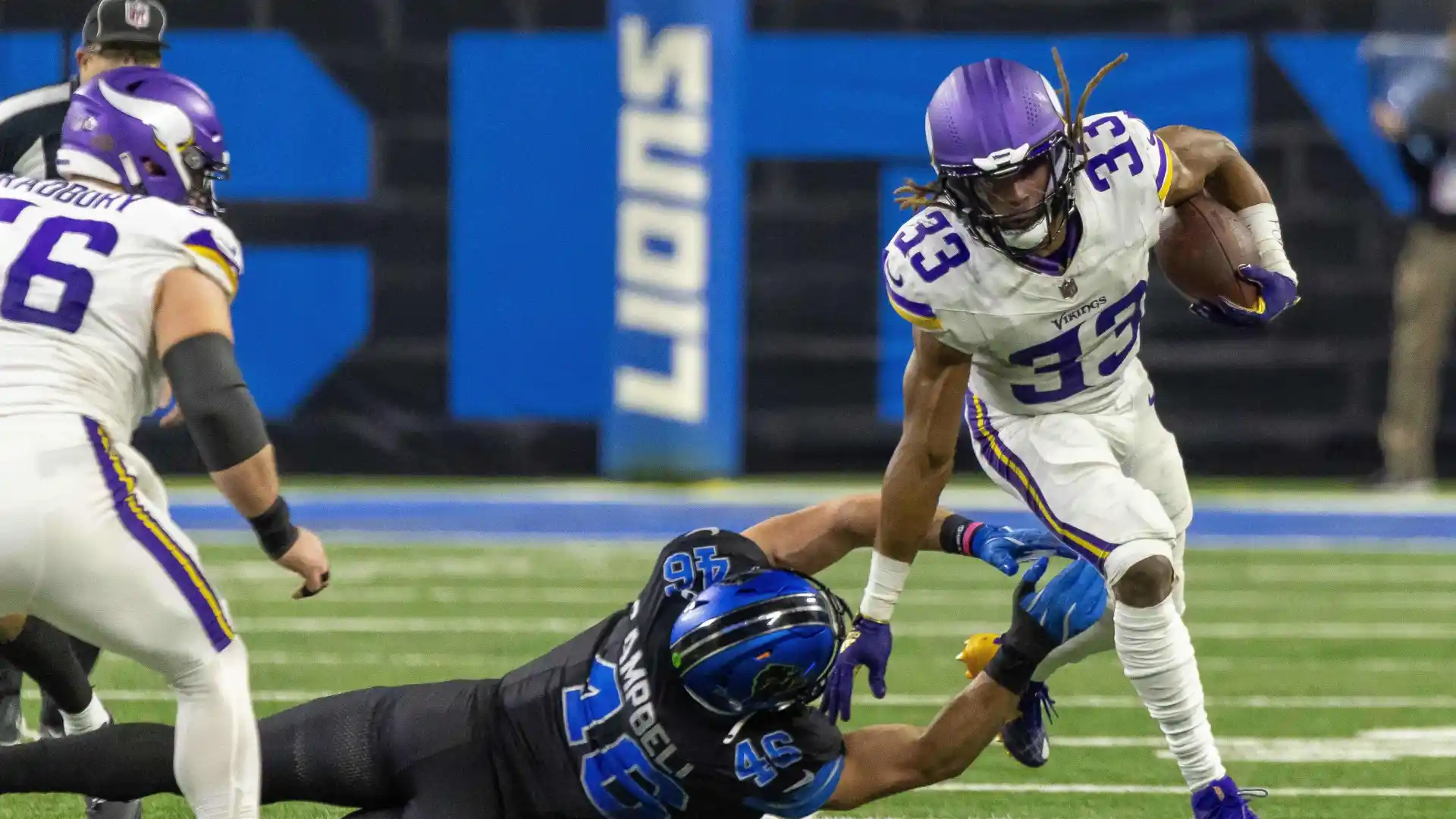
On Christmas Day in Minneapolis the Minnesota Vikings defeated the Detroit Lions 23–10, a result that eliminated Detroit from postseason contention and—by virtue of that loss—clinched a playoff spot for the Green Bay Packers.
The game was decided by a one-sided defensive performance from Minnesota: the Vikings forced six turnovers and recorded five sacks, turning takeaways into points and control. Detroit finished the night with a season-high six turnovers, a catastrophic development that erased the Lions’ postseason chances.
What happened — quarter by quarter
First quarter. The tone was physical from the start. Detroit struggled to hold protection on early drives, and Minnesota’s defensive pressure produced a pair of early errors that kept the Lions out of rhythm. Minnesota’s opening scoring came via three field goals as Minnesota’s offense moved methodically between punts and turnovers.
Second quarter. The Lions managed a sustained scoring drive — a lengthy possession capped by a 4-yard touchdown pass from Jared Goff to rookie Isaac TeSlaa — but turnovers continued to attack Detroit’s margin for error. The Vikings answered by leaning on complementary football: strong special teams kicking, a field-position game, and opportunistic defense that forced more mistakes.
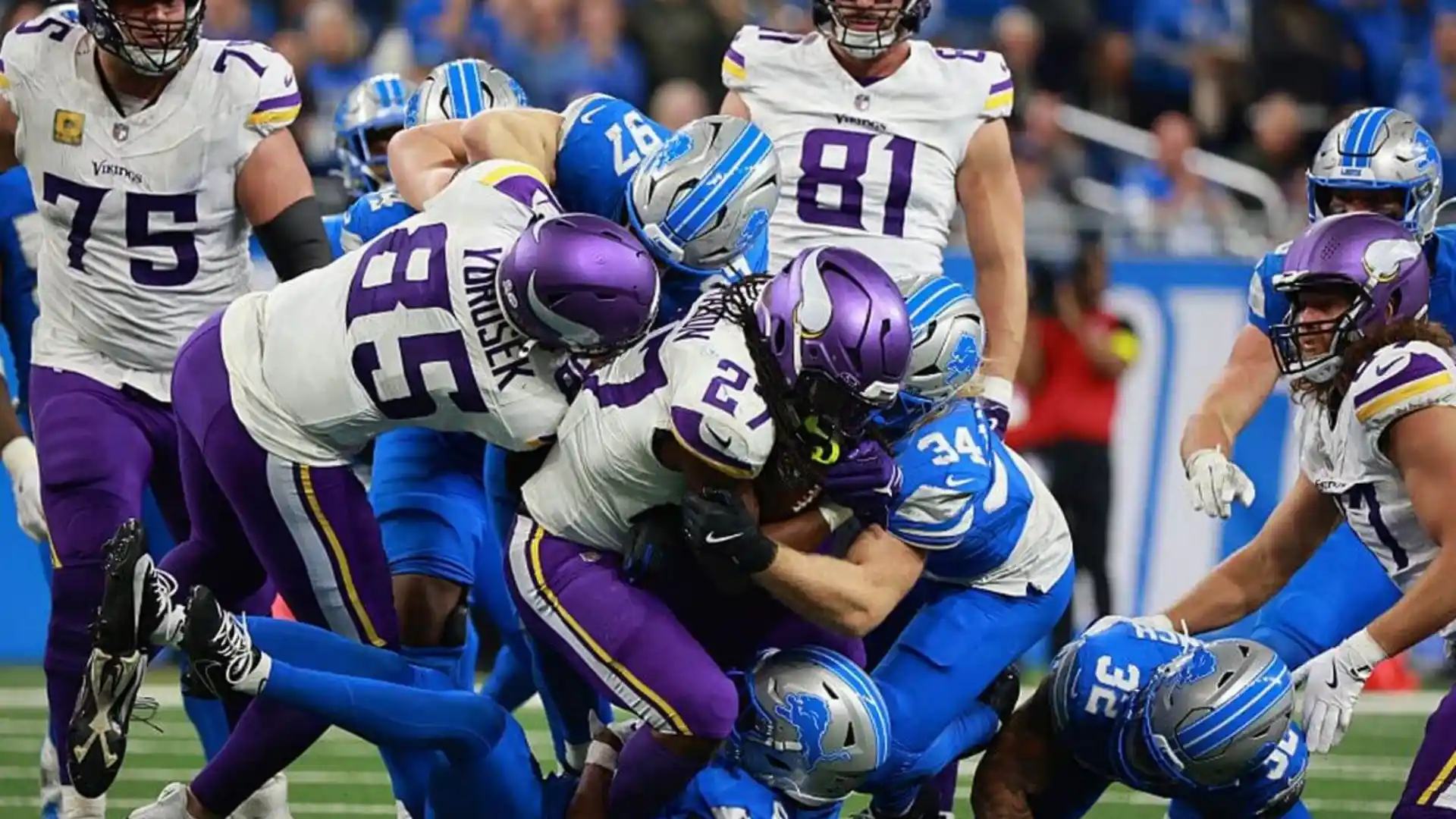
Third quarter. Neither offense could solve the respective defenses consistently. The Vikings continued to generate pressure and field goals, while Detroit’s running game failed to gain consistent traction. Minnesota’s defensive front and linebackers were in the Lions’ backfield repeatedly.
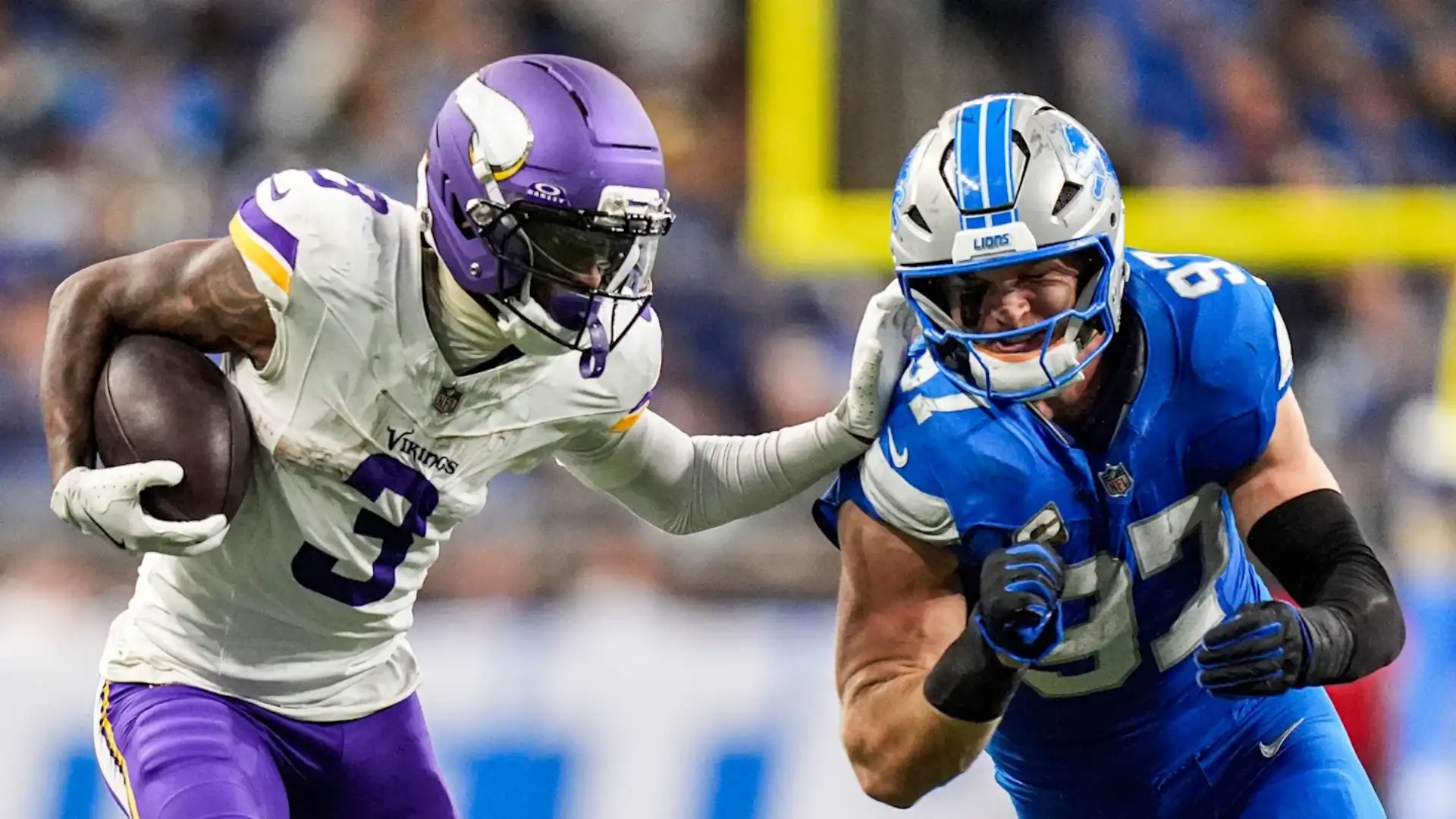
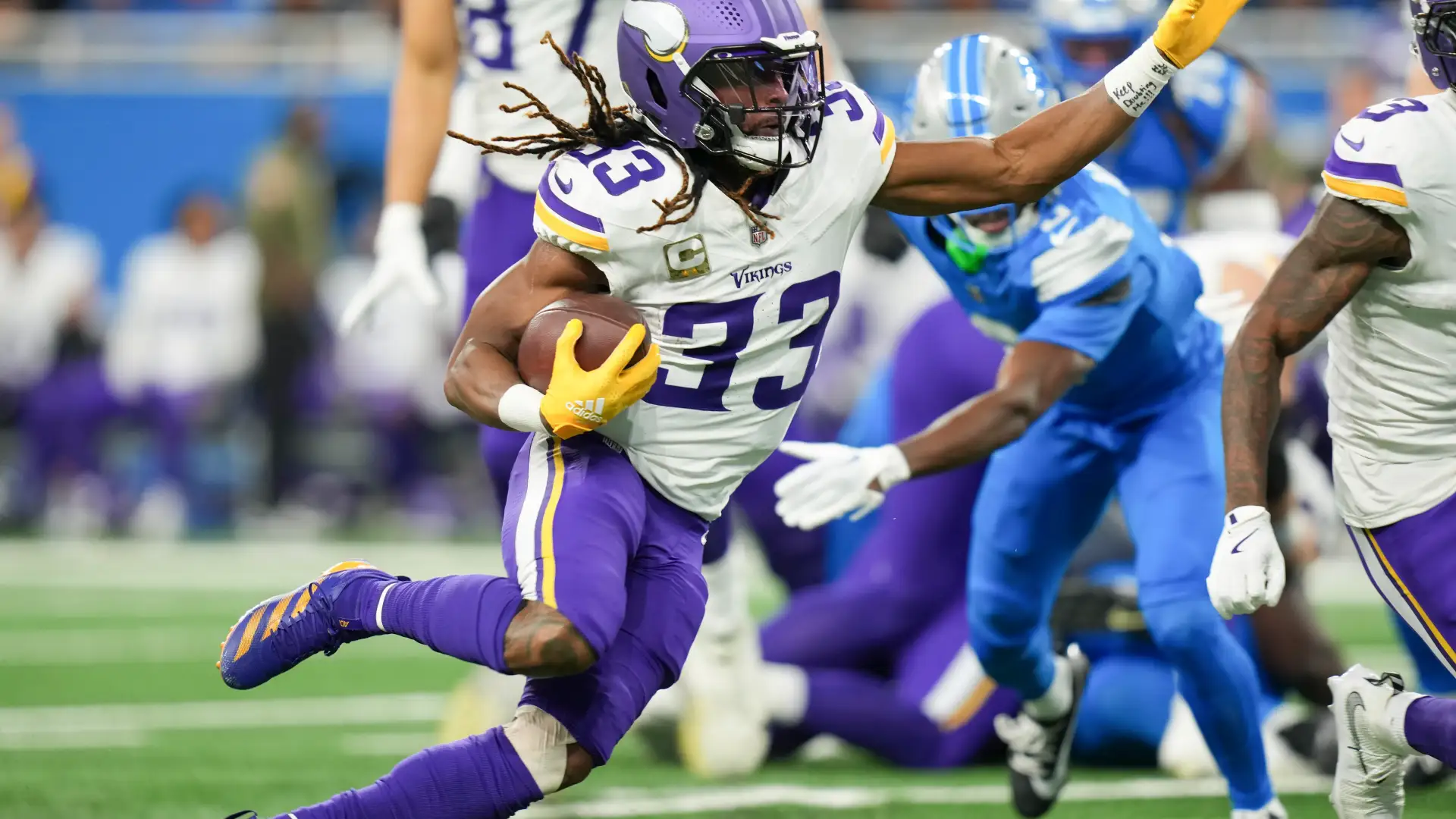
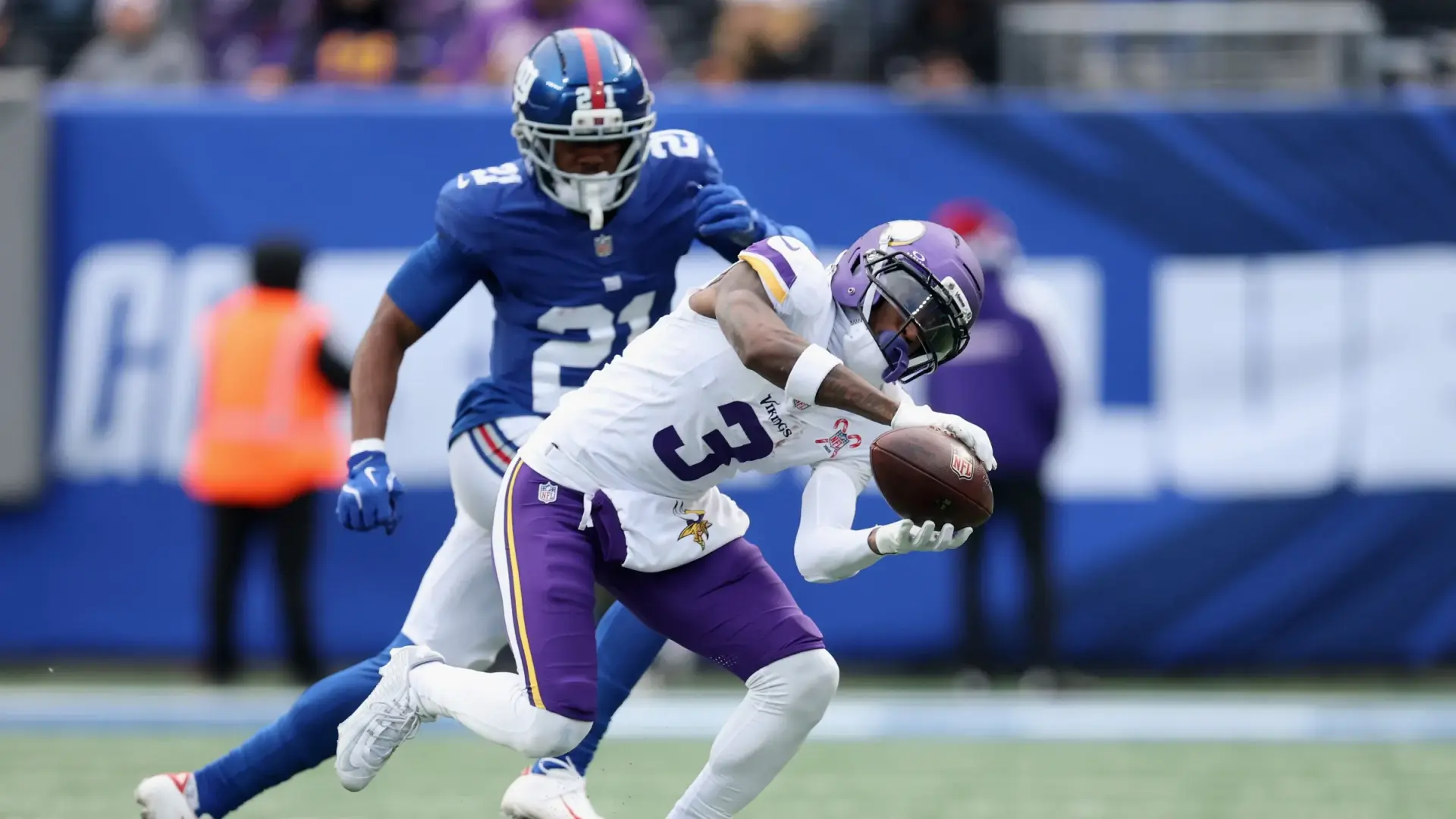
Fourth quarter. The Vikings sealed the outcome late: a 65-yard end-around (officially reported as Jordan Addison’s game-changing play) pushed the Vikings clear, and long field goals extended the lead to its final margin. Detroit’s six turnovers were the definitive factor; the offense could not overcome a self-inflicted collapse.
Box-score highlights & load-bearing facts
- Minnesota Vikings 23, Detroit Lions 10 — final score.
- Detroit committed six turnovers (three interceptions, multiple fumbles) and allowed five sacks. Those figures were decisive.
- Jared Goff finished 18-for-29 for 197 yards, one touchdown and two interceptions; he was under heavy pressure (sacked five times) and the turnovers included two interceptions and multiple fumbles.
- The result eliminated the Lions from playoff contention and allowed the Packers to clinch a postseason berth.
- Jordan Addison produced the pivotal explosive play late that shifted field position and iced the game for Minnesota.
Why the Vikings won: three clean reasons
1) Turnover margin and defensive game plan. Minnesota’s coaching staff dialed up pressure and disguised looks that created confusion for Detroit’s protection schemes. The Vikings were active at the point of attack, and several plays were true takeaways — forced fumbles and interceptions that swung field position. When a defense can win turnover-for-turnover, it not only limits opponent scoring but also creates short fields for your offense. That’s exactly what happened.
2) Pass rush applied at scale. The Viking front and designated pass-rushers turned up the heat throughout the evening. Five sacks is not a coincidence; it reflects both effective game planning and execution at the point of attack. The Lions’ offensive line — already thinner due to injuries and absences — could not consistently preserve clean pockets for Goff to scan the field.
3) Minimizing offensive mistakes. Minnesota’s offense did not need to be spectacular; the unit stayed within itself, took what the game provided, and relied on disciplined play: field goals, clock management, short scoring drives, and an explosive late play when one was needed. The formula — defense forces turnovers, offense avoids mistakes, special teams provide reliable kicking — is a long-standing winning recipe.
Player spotlights and grades
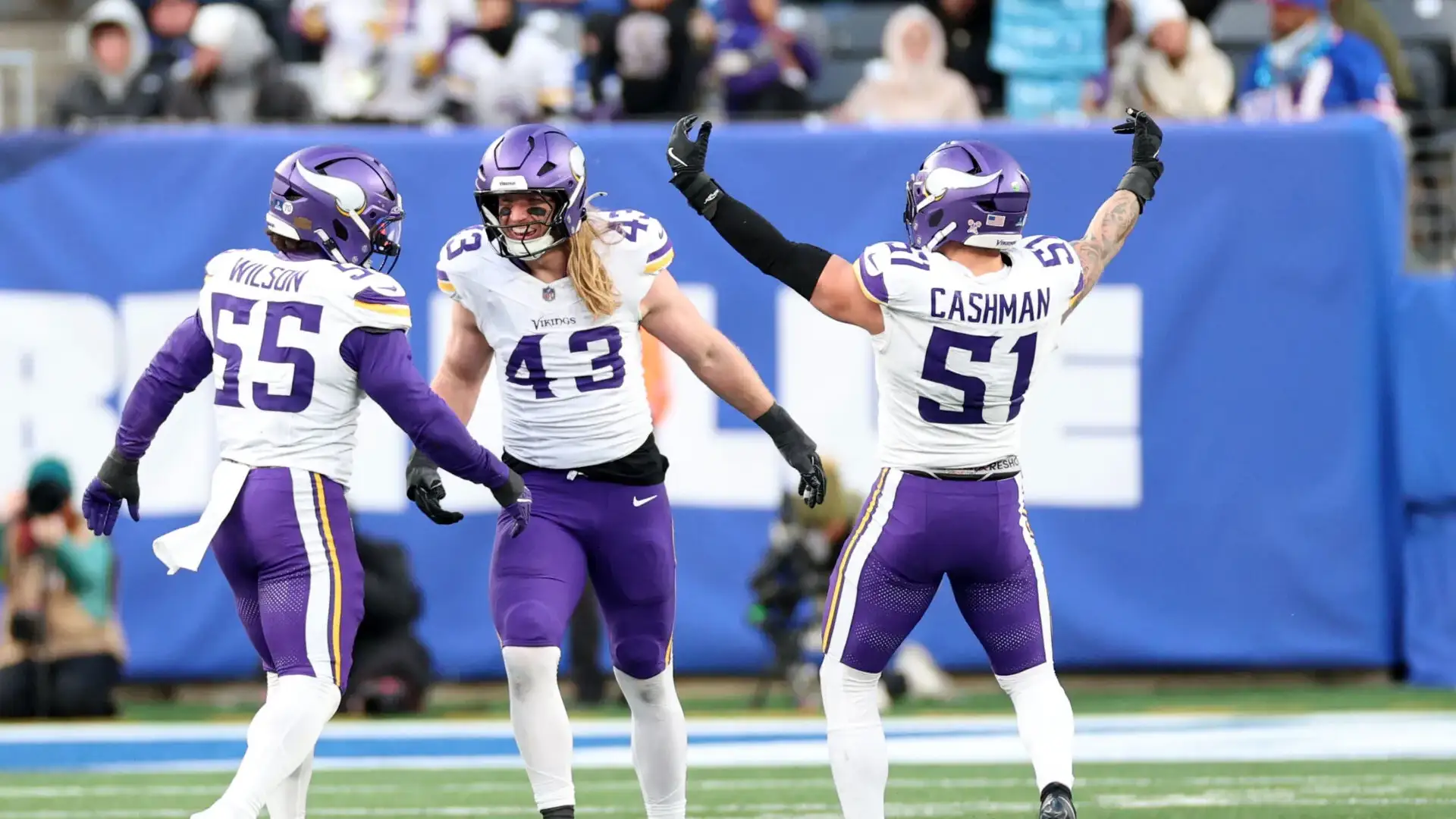
Minnesota Vikings — Defensive MVP candidates
- Harrison Smith / Secondary unit: The veteran safety and the unit collectively made plays in coverage and capitalized on Detroit’s miscues. Smith’s presence in the middle of the field aided a unit that generated multiple takeaways.
- Andrew Van Ginkel & defensive line: Van Ginkel’s strip and other pressure plays were game graders. The front seven won rushing lanes and pressure lanes — five sacks are testament to consistent pressure.
- Jordan Addison: The explosive 65-yard end-around was the largest swing play of the night and a textbook reminder that a single big play changes win probability quickly.
Detroit Lions — Offensive failures & bright spots
- Jared Goff (C-): Goff’s stat line masks how much pressure and how many chaotic sequences he faced — five sacks and multiple forced turnovers created a difficult environment. His postgame quote, “It sucks,” summarized the emotional weight of missing the postseason after high expectations.
- Isaac TeSlaa (rookie WR, B): The 4-yard touchdown reception was an encouraging moment for the rookie, and it showed Detroit can still manufacture long drives when given time on the ground.
- Offensive line (D): Injuries and sudden absences (Taylor Decker was out, per reports) left the unit undermanned; protection breakdowns were costly and contributed directly to sacks and fumbles.
Coaching decisions & accountability
Detroit head coach Dan Campbell did not hedge after the game: he labeled the loss “disappointing,” said the organization must examine the roster and coaching, and promised internal review. “Whenever you lose, it takes a village. Everybody’s involved, including myself,” Campbell said — a public signal that heavy evaluation is coming in the offseason.
Minnesota’s coaching staff, by contrast, earned praise for a pragmatic defensive game plan that created conflict for the Lions’ protection schemes and forced turnovers. The staff’s ability to generate pressure and disguise blitzes was a clear strategic advantage.
Playoff implications and the NFC picture
The direct consequence of Detroit’s loss was the end of the Lions’ 2025 postseason hopes. Entering the year Detroit had strong odds to make the playoffs; now those hopes conclude at 8-8 after a late-season freefall. The defeat simultaneously handed the Green Bay Packers a clinched berth in the NFC, a development that reshaped the playoff bracket.
For Minnesota, the win represented momentum: the Vikings extended a winning streak to four games and rejoined the conversation for late-season positioning. While Minnesota’s march toward the postseason was not guaranteed, the defense’s form and timely explosive plays preserved the team’s competitive life headed into the final week.
Tactical breakdown — schematic reads
Vikings defensive schematic. Minnesota blended zone and disguised man looks while occasionally sending pressure from different angles. The disguise postponed Goff’s progression and created windows of opportunity for linebackers and safeties to attack the ball. The effective pass rush collapsed pockets and forced hurried throws; the secondary manufactured turnovers on contested balls.
Lions offensive schematic — where it broke down. Detroit’s scheme relies on quick timing routes, play-action, and run-pass balance. When the protection fails and the line can’t sustain blocks, timing routes break down and the quarterback is forced to scramble or throw into coverage. That is exactly what Minnesota’s rush plan sought to accomplish: win the with few pass rushers while the secondary leverages coverage to capitalize on mistakes.
Special teams and field position. Minnesota’s reliable long-range kicking and conservative play management increased the cost of each Detroit mistake. When a team is turning the ball over, short fields and three-and-out sequences are magnified; a reliable kicker turns turnovers into certain points. Will Reichard’s long field goals helped maintain scoreboard separation.
Injury context and personnel notes
Detroit entered the contest with some personnel questions; the absence of starting left tackle Taylor Decker (illness) was reported pregame and left the Lions more vulnerable in pass protection. Depth issues along the line were a recurring theme in 2025 and were particularly costly in this matchup.
Minnesota’s personnel rotated fresh pass rushers and used matchups to create pressure without sacrificing coverage. The ability to sub in pass-rush specialists while maintaining coverage integrity is a hallmark of a disciplined defensive roster and coaching plan.

What the final week looks like for each team
Detroit Lions — With the season over and a disappointing 8–8 record, Detroit will face a deep offseason review. Coach Campbell’s comments indicate the staff and front office expect to examine roster construction, coaching continuity, and personnel upgrades. The short term: finish the year against the Chicago Bears; the long term: strategic decisions about offensive line depth and turnover elimination will be at the top of the to-do list.
Minnesota Vikings — Minnesota heads into the final regular-season game with renewed defensive confidence. A fourth straight win shows the team can execute a complementary style that relies on defense to sustain success. The next priorities will be cleaning up offensive consistency and maintaining defensive discipline as the playoff picture clarifies.
Context & history — why this game matters beyond Week 17
For Detroit, the contrast between the franchise’s recent high (a 15-win season and deep playoff run in 2024) and the current failure to reach the postseason underscores how marginal differences and turnover regressions can pivot a team from contender to disappointment. In one sense the result is a reminder of how fragile success can be in the NFL: injuries, coaching movement (both coordinators left in the offseason), and sudden slumps compound quickly.
For Minnesota, the victory is a model of how a team with an above-average defense and a discipline-first approach can overcome offensive limitations. The Vikings’ defensive performance not only won a single game but also demonstrated a sustainable approach that can carry into meaningful games in January.
Quotable moments
Jared Goff, reflecting on elimination: “It sucks. We’ll reflect on the whole season after next week, but yeah, it sucks.” His rawness captured the immediate emotional toll of a season that began with high expectations and ended abruptly.
Dan Campbell, on accountability: “I’m going to be looking at a lot. I’m going to be looking at a lot of things because I do not like being home for the playoffs. … Whenever you lose it takes a village. Everybody’s involved, including myself, so I’m always going to look at myself first.” Campbell framed the loss as a call for organizational introspection.
Data, trends and an evidence-based view
Turnover margin remains the single most predictive in-game statistic for winning. Teams that commit multiple turnovers are statistically far less likely to win; the Lions’ six turnovers effectively collapsed their win probability. This game is a clean example of how turnover variance and pass-rush success correlate strongly with outcomes across the league.
The broader trend for Detroit in 2025 — losing four of their last five before the Vikings game — also points to accumulation of small problems (coaching turnover, marginal personnel regression, injuries) that compound late. The NFL’s parity means small margins (a few plays, a missed block, a missed tackle) are the difference between a playoff berth and offseason reflection.
Final takeaways
- The Vikings’ defense dominated and produced the game-defining turnovers. That unit’s performance was the decisive variable.
- Detroit’s offensive collapse — six turnovers and five sacks — is a season-ending warning sign that will prompt substantive review by staff and front office.
- The Packers clinched a playoff berth because of Detroit’s result, which shows how interconnected divisional outcomes can be late in the season.
- Minnesota, riding a four-game winning streak, will enter the season’s final week with momentum and questions remaining about offensive consistency.
Where to find the official recaps and box score
Full statistical box scores and official recaps are available from primary sources: ESPN’s game recap and box score, the NFL official recap, the Detroit Lions’ team recap, and the Minnesota Vikings’ game notes — all of which informed this article. For play-by-play detail consult the links below.